Galvanized and vinyl-coated chain link options
We help you choose between plain galvanized and vinyl-coated mesh based on how much appearance matters and what the fence needs to do.

Fence Services
Practical, durable chain link fence installation for Everett and Snohomish County properties — yards, pet enclosures, side yard boundaries, and property lines that need a reliable fence without the upkeep that wood requires.
We help you choose between plain galvanized and vinyl-coated mesh based on how much appearance matters and what the fence needs to do.
Walk gates, double gates, and utility access gates are planned around real use instead of being treated like an afterthought.
You get the actual fence spec in writing — post type, mesh, coating, gates, and timeline — before you decide anything.
About the Service
Chain link gets underestimated. A lot of homeowners think of it as a temporary or industrial solution — something for construction sites or commercial properties — and overlook it for residential use. But for the right situation, chain link is genuinely the better option, and choosing it over cedar or vinyl isn't a compromise. It's a practical decision.
The situations where chain link makes the most sense in Everett and Snohomish County are usually straightforward:
If any of those describe your situation, chain link is worth considering seriously. We install chain link fences for Everett-area homeowners regularly, and most of them chose it for practical reasons — not because it was the only option, but because it was the right one.
Specifications
Materials and Hardware
Common Uses
Our Process
We come to your Everett-area property, walk the fence line, and look at what we're working with. Grade changes, gate locations, soil conditions, existing fencing that needs to be removed, and any structures the fence needs to connect to — all of it affects the layout and the specification.
For pet enclosures specifically, we ask about the dog's size, breed, and any history of digging or climbing. That informs mesh size, fence height, and whether a bottom apron or anti-dig measure is worth adding.
After the visit we put together a written estimate with the fence specification — post gauge, mesh gauge and opening, coating type, gate hardware — and the total scope. We walk you through the galvanized vs. vinyl-coated decision, mesh size options, and gate sizing based on your specific situation.
If the project requires a permit — chain link fences above certain heights in Everett typically do — we confirm that during the estimate and handle the application as part of the project.
Once you approve the estimate we lock in the schedule and confirm material orders. Chain link material lead times are generally shorter than wood, but specific mesh gauges, vinyl coatings, or custom gate sizes can take additional time. We tell you honestly if anything affects the start date.
Terminal posts at corners, ends, and gate openings are set first in concrete footings at the appropriate depth for the fence height and local soil conditions. Line posts follow. We check alignment and plumb on every post before the concrete sets — a post that's slightly off at this stage will be visibly off when the mesh goes on.
Concrete cure time varies with weather. We allow adequate cure time before tensioning the mesh — pulling fabric tight against posts that haven't fully cured can shift them out of alignment.
Top rails are connected across the post run, tension bars are attached at terminal posts, and the mesh is stretched and tensioned across the full fence run. We check tension consistency and diamond uniformity before fastening. Gates are hung on correctly sized hardware, adjusted for smooth swing and clean latch alignment, and tested through several cycles before we consider them done.
When installation is complete we walk the full fence with you — checking post stability, mesh tension, fabric clearance from the ground, gate function, and hardware tightness. We clean the site completely, removing any post hole spoil, wire offcuts, and packaging. If anything needs adjustment, we handle it before we leave.
Local Experience
We install chain link fences throughout Everett and the surrounding Snohomish County area — Marysville, Snohomish, Mill Creek, Mukilteo, Lynnwood, Edmonds, and Bothell. We also work in Shoreline, Kenmore, Kirkland, Redmond, Kent, and Renton.
Chain link in this area deals with consistent moisture, high soil saturation through the wet season, and periodic ground movement from freeze-thaw cycles in colder winters. Post depth and concrete mix decisions account for those conditions specifically. A post depth adequate for a dry-climate installation may not hold as well in the clay-heavy soils common in lower-lying Everett neighborhoods.
We know the permit requirements across the different jurisdictions in Snohomish County. Chain link fences above a certain height in Everett require a permit, and the threshold varies between the city limits and unincorporated Snohomish County. We confirm requirements at the estimate and handle the application — you don't need to manage that process separately.
Why Choose Us
We install both cedar and chain link fencing — which means we can give you an honest comparison between the two for your specific situation rather than steering you toward whatever we happen to build more of. If chain link is the right call for your yard, we'll say so. If cedar would serve you better, we'll say that instead.
Chain link and fences in general are a core part of what we do. We're not a deck builder who takes fence work as a secondary service. The crew that gives you the estimate installs the fence — the post spacing, gate locations, and mesh specifications from the planning conversation carry through to the installation.
What homeowners who've worked with us tend to mention
We're also honest about what chain link won't do. It doesn't provide privacy unless slats are added, and it has a functional look rather than a decorative one. If your primary goal is curb appeal or full visual privacy, cedar is probably the better fit — and we'll tell you that at the estimate visit. If you're weighing chain link against a cedar privacy fence, our cedar fence pagecovers how that comparison works for different yard situations.
Recent Projects
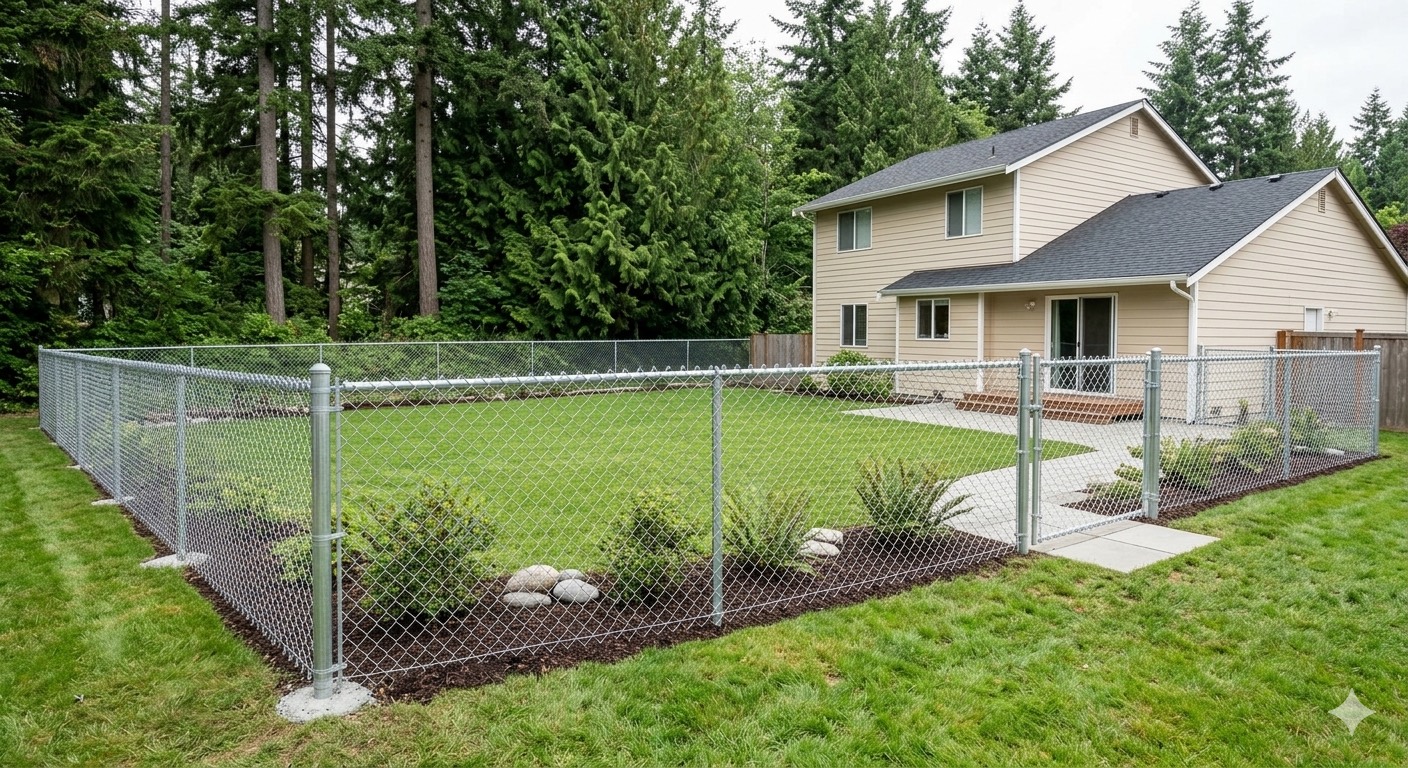
Dog Fence
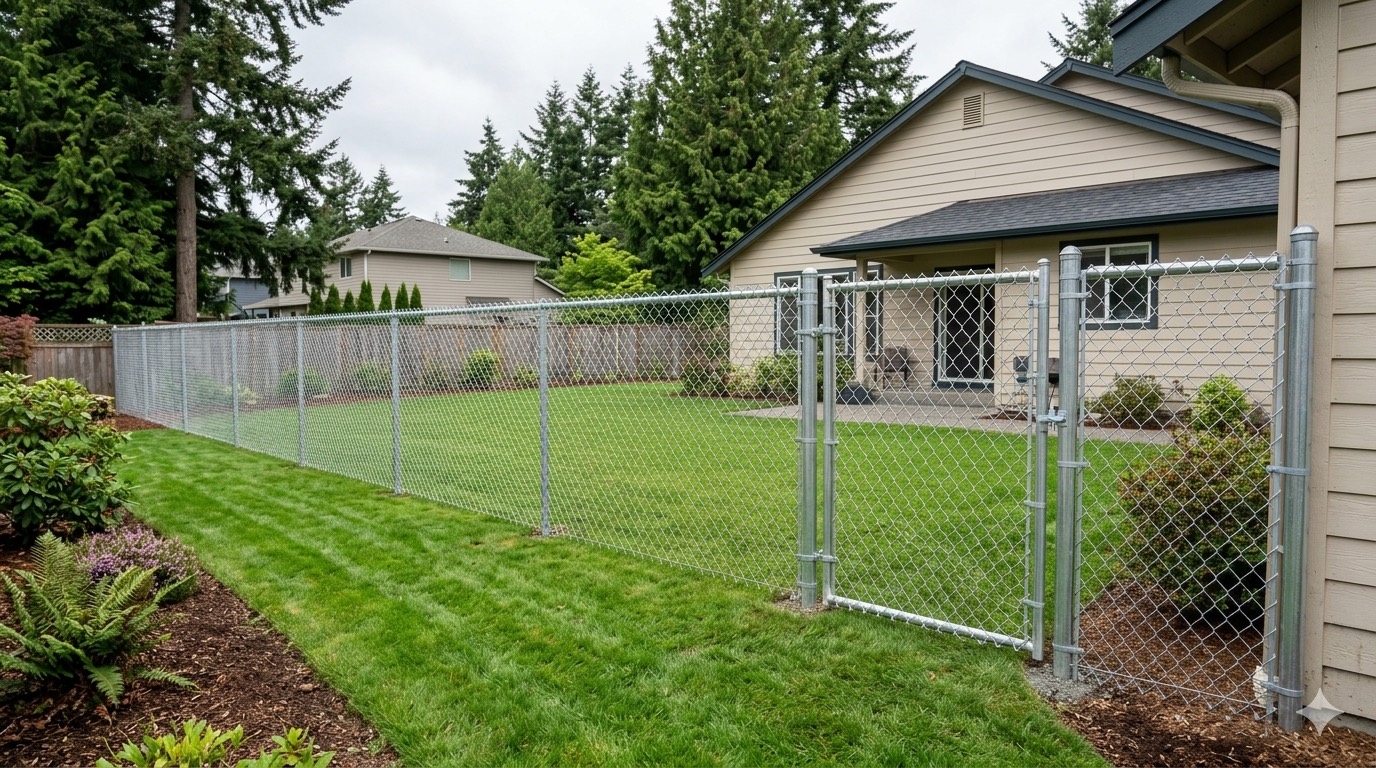
Side Yard Fence
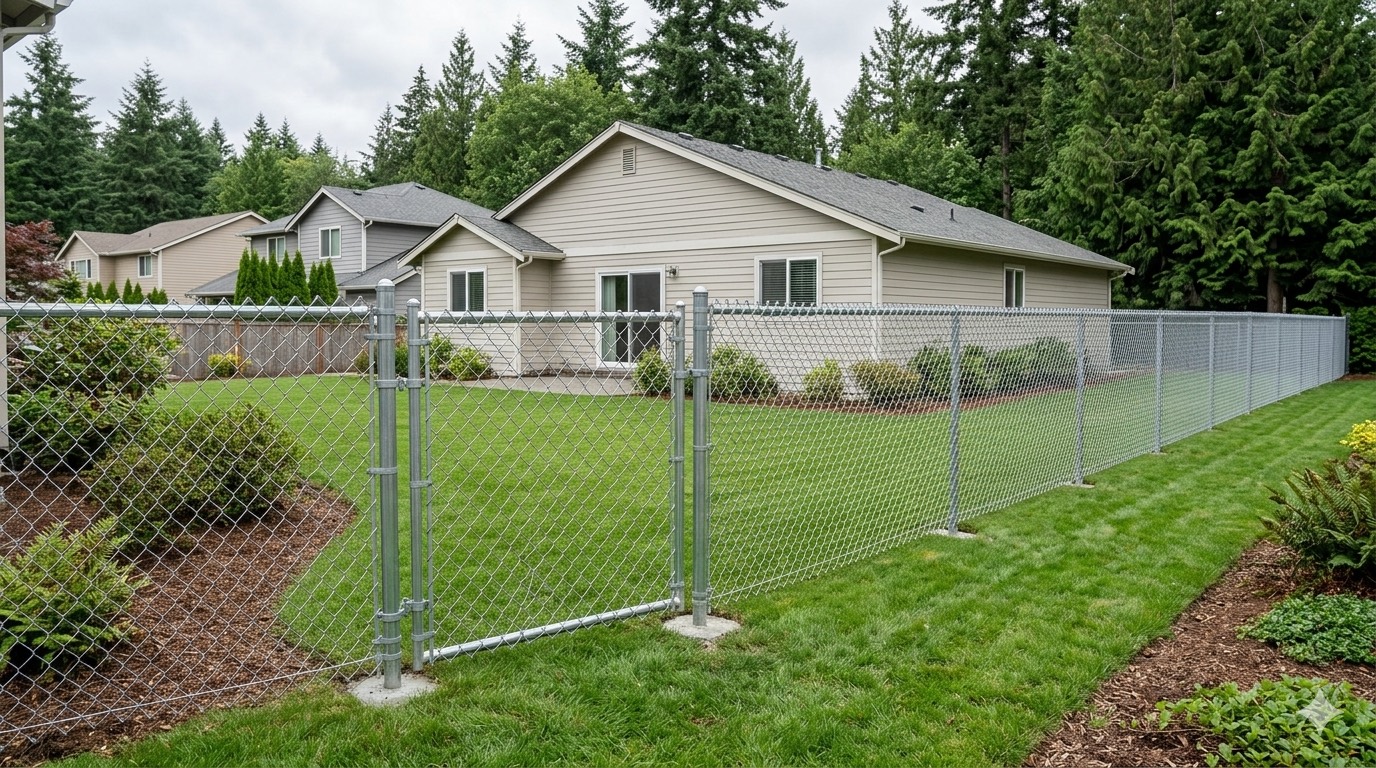
Property Boundary
FAQ
Hot-dip galvanized chain link fence installed with concrete-set posts typically lasts twenty-five to forty years in the Pacific Northwest. The main failure modes are post rust at or below grade — which happens when posts aren't galvanized properly or when the footing doesn't seal the post against soil moisture — and gate hardware corrosion from poor-quality fittings. A fence built with quality materials and properly set posts will outlast most cedar fences in a wet climate without any maintenance beyond occasional rinsing.
Very little. Galvanized chain link doesn't rust under normal conditions and doesn't need painting, sealing, or regular treatment. An occasional rinse to remove debris and algae is about all it needs. Gate hardware should be checked periodically — a loose hinge is a simple fix when caught early. If vinyl-coated mesh develops chips or scratches that expose the underlying wire, touch-up paint extends the life of the coating at that point.
Yes, with the right specification. The key variables are fence height, mesh opening size, and whether your dog is a digger or a climber. A standard 5-foot chain link with 2-inch mesh contains most dogs reliably. For larger or more athletic breeds, 6-foot height is a better choice. For small dogs, 1.75-inch or 1-inch mesh prevents them from pushing through or getting stuck. For diggers, burying the bottom of the mesh below grade or adding a concrete or gravel apron at the fence line eliminates that problem. We discuss the specifics for your dog during the estimate visit.
Both are galvanized steel wire — vinyl-coated mesh has an additional PVC layer over the galvanized wire. Galvanized is the standard, lower-cost option that performs reliably outdoors. Vinyl-coated is more expensive and has a cleaner appearance — black vinyl-coated chain link in particular is less visually obtrusive than silver galvanized mesh. The coating adds minor additional corrosion protection but the main reason most homeowners choose it is appearance, not performance.
It depends on the fence height and your property's zoning designation. In most Everett residential zones, fences up to six feet in the rear yard can be built without a permit. Front yard fences and taller installations have different thresholds. We confirm permit requirements during the estimate visit and handle the application as part of the project if one is needed.
Yes. Chain link mesh can be racked — pulled diagonally to follow the slope — in a way that keeps the fabric close to the ground along the grade change. This is one of chain link's practical advantages over wood fencing on sloped terrain, where stepped wood panels leave gaps at the bottom that don't work well for pet containment. We look at the grade during the estimate visit and discuss the racking approach that fits the slope.
Fence length, height, mesh specification, coating type, number of gates, and site conditions all affect the price. Chain link is typically more cost-effective per linear foot than cedar for the same fence run, though the total project cost depends more on scope than material choice. The most accurate number comes from an on-site visit — the estimate is free and there's no obligation attached to it.
If you're planning a chain link fence for your Everett-area yard, the first step is a free on-site visit. We walk the fence line, look at the grade and soil conditions, discuss gate placement and mesh options, and put together a clear written estimate with the full specification and timeline.
No phone guesses. No pressure to decide on the spot.
Call (425) 645-9799 or fill out the estimate request form and we'll get back to you within one business day.
We serve Everett, Marysville, Snohomish, Mill Creek, Mukilteo, Lynnwood, Edmonds, Bothell, Kenmore, Shoreline, Kirkland, Redmond, Bellevue, Kent, Renton, and surrounding Snohomish County communities.