Board-on-board, horizontal, dog-ear, and custom cedar styles
We build around the actual property and the privacy level you want instead of forcing every yard into one default fence layout.

Fence Services
Privacy fencing, boundary fences, and custom cedar installations for Everett and Snohomish County homeowners — built with straight posts, natural materials, and the kind of planning that keeps a cedar fence looking right after the first few Pacific Northwest winters.
We build around the actual property and the privacy level you want instead of forcing every yard into one default fence layout.
Post depth, spacing, and footing decisions are made for the fence height, style, and soil on site so the line stays straight and the gates stay aligned.
You get a real property walkthrough, style guidance, and a written estimate before making a decision.
About the Service
Cedar has been the default fence material in the Pacific Northwest for a long time, and it earns that position. Western red cedar is naturally resistant to moisture, rot, and insects without chemical treatment — which matters when you're building something that will sit in the ground and deal with Everett rain for fifteen or twenty years.
The look of a cedar fence also fits most Northwest homes in a way that vinyl or metal fencing simply doesn't. It's warm, it ages naturally, and it reads as residential rather than industrial. A well-built cedar privacy fence along the back of an Everett yard looks like it belongs there.
At Northwood Renovation, we install cedar fences across Everett and Snohomish County — board-on-board privacy fences, horizontal cedar designs, dog-ear fencing, and custom layouts planned around the specific property. Every installation starts with understanding what the fence needs to do, not just what it needs to look like.
Fence Styles
Cedar fencing comes in several distinct styles and the choice affects appearance, privacy level, maintenance, and cost. Here's how the main options compare:
Materials
Ownership
Cedar fencing doesn't require a complicated maintenance schedule, but it does require some. Here's what realistic cedar fence ownership looks like in the Pacific Northwest:
Sealing and staining: A cedar fence left completely untreated will gray out over time — some homeowners like the silver-gray patina, others prefer to hold the original warm tone. If you want to maintain the color, an application of cedar-specific sealer or semi-transparent stain every two to three years is the standard schedule. The fence should be cleaned first so the new coat bonds properly.
Mildew: Cedar fences in shaded Everett backyards, or on north-facing exposures, develop surface mildew during the wet season. This is a surface condition that washes off with a deck cleaner or light pressure rinse. It's not damaging the wood structurally — it's just a cosmetic condition that responds to basic cleaning.
Post bases and ground clearance: The most important maintenance check on a cedar fence is the bottom of the boards, not the surface. Boards that sit close to the soil or mulch retain moisture at the base and begin to rot from the bottom up. Keeping a few inches of clearance between board bottoms and the ground extends the life of the boards significantly.
Gate alignment: Gates are the hardest-working part of a fence. After a few seasons, check that hinges are still tight, the gate swings cleanly, and the latch aligns without forcing. A loose hinge caught early is a five-minute fix. A gate post that has shifted is a more involved repair.
Our Process
Step 1
We come to your property and walk the full fence line. We look at the grade, note any slope transitions that affect panel layout, identify gate locations, check for tree roots or buried obstacles along the run, and measure the total fence length.
We also look at neighboring fences, setback requirements, and how the fence will connect to the house or any existing structures. These details affect both the design and the permit requirements — and it's better to know about them before work starts than during installation.
Step 2
After the walkthrough we put together a written estimate with the fence style, post specifications, gate locations, and total scope. We walk you through the board-on-board vs. dog-ear vs. horizontal decision in the context of your yard and goals — not as a general overview but as a specific recommendation for your property.
If the project requires a building permit — which cedar fences in Everett often do above a certain height — we confirm that during the estimate and handle the application as part of the project.
Step 3
Once you approve the estimate we lock in the schedule and confirm material orders. Cedar availability and grade selection can affect lead time — we tell you honestly if there's a wait rather than booking a start date that depends on uncertain delivery.
Step 4
Post setting is the most important step in the entire installation. We set posts at correct spacing with concrete footings at the depth appropriate for the fence height and soil conditions. Posts are checked for plumb and alignment before the concrete sets.
This step takes more time than simply driving posts into the ground — and it's why our fence lines stay straight and our gates stay aligned. We allow concrete to cure before attaching rails and boards.
Step 5
Once posts are set and cured, rails go on followed by cedar boards. Board spacing, height, and alignment are checked throughout the run. Gates are fitted with correct hinge placement, latch alignment, and hardware appropriate for the gate width and weight.
We check the full fence line from both sides before moving to the next section — not at the end when corrections are harder to make.
Step 6
When the installation is complete we walk the full fence line with you. We check post stability, board alignment, top-line consistency, gate swing and latch, and hardware condition. If anything needs adjustment before we leave, we handle it.
We clean the site completely — no post hole debris, no lumber offcuts, no hardware packaging left in the yard.
Local Experience
Most of our cedar fence work is in Everett and the surrounding Snohomish County communities — Marysville, Snohomish, Mill Creek, Mukilteo, Lynnwood, and Edmonds. We also install cedar fences regularly in Bothell, Kenmore, Woodinville, Shoreline, Kirkland, and Redmond.
Working consistently in this area means we know the conditions that affect cedar fences here specifically. The soils near the Everett waterfront and along low-lying areas near the Snohomish River drainage hold moisture differently than the well-drained soils on the hillside neighborhoods above Highway 99. Post depth requirements and concrete mix decisions account for the specific soil conditions at the installation site.
We're also familiar with the setback requirements and permit processes across different Snohomish County jurisdictions. Cedar privacy fences above a certain height often require a permit in Everett, Marysville, and Mukilteo. Unincorporated Snohomish County has different thresholds. We know the local requirements and handle the permit process as part of the project.
Why Choose Us
We specialize in fences, decks, and outdoor structures — not a long list of general services. That focus means the situations that come up on cedar fence installations are ones we've worked through before: a sloped fence run that needs racked panels, a horizontal fence that needs properly sized posts, a gate that has to work reliably on soft soil, a fence that needs to connect cleanly to a neighbor's existing installation.
The crew that gives you the estimate builds the fence. The post spacing, grade transitions, and gate locations discussed during the planning visit make it to the installation because the same people are doing both.
What homeowners tend to mention after working with us
We'll also tell you honestly if a different fence type would serve you better. If the yard layout calls for chain link in one section and cedar in another, or if a repair makes more sense than a full replacement, we say so during the estimate. If you're weighing cedar against a lower-maintenance option, our chain link fence page covers how that comparison works for different yard situations.
Recent Projects
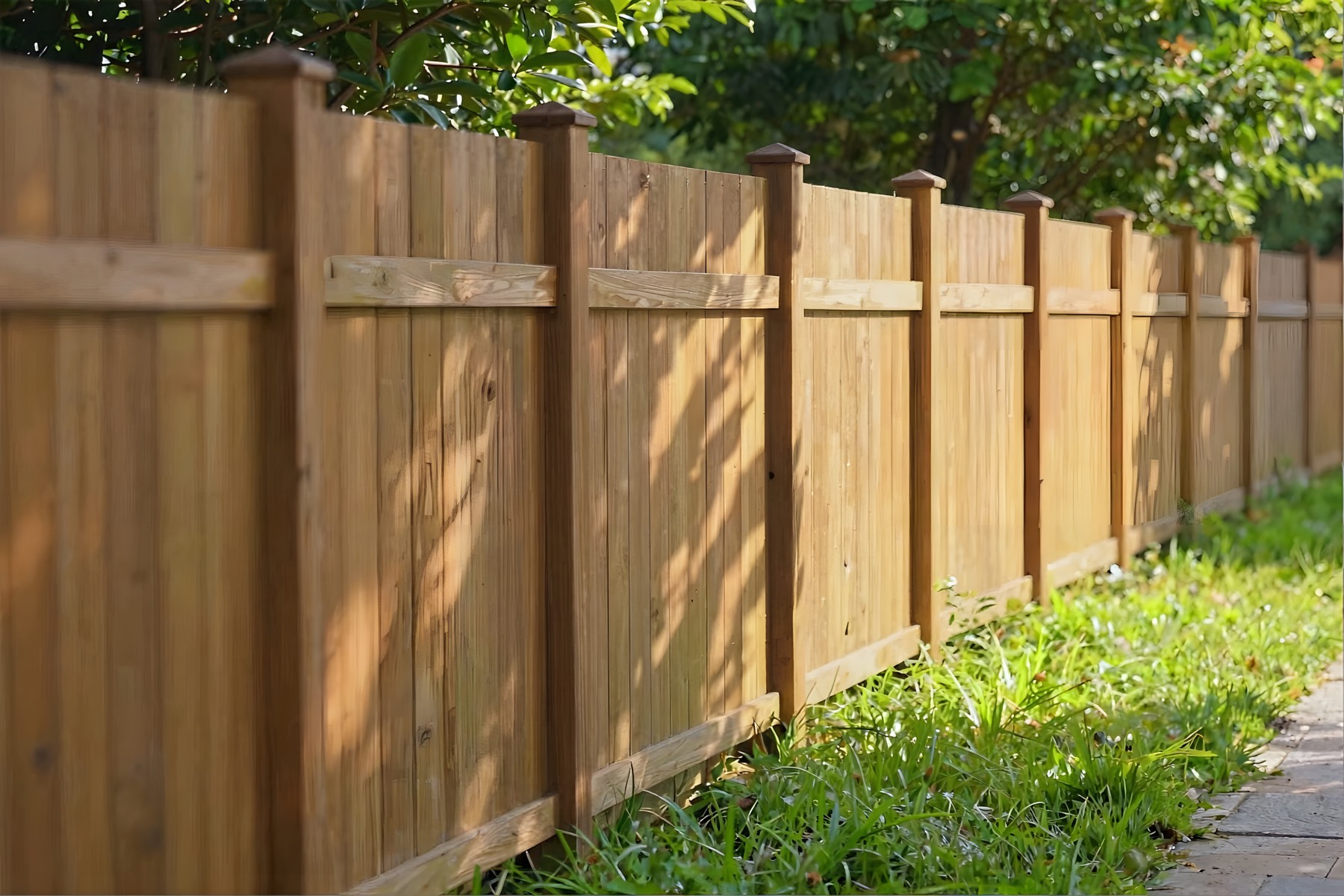
Fence Build
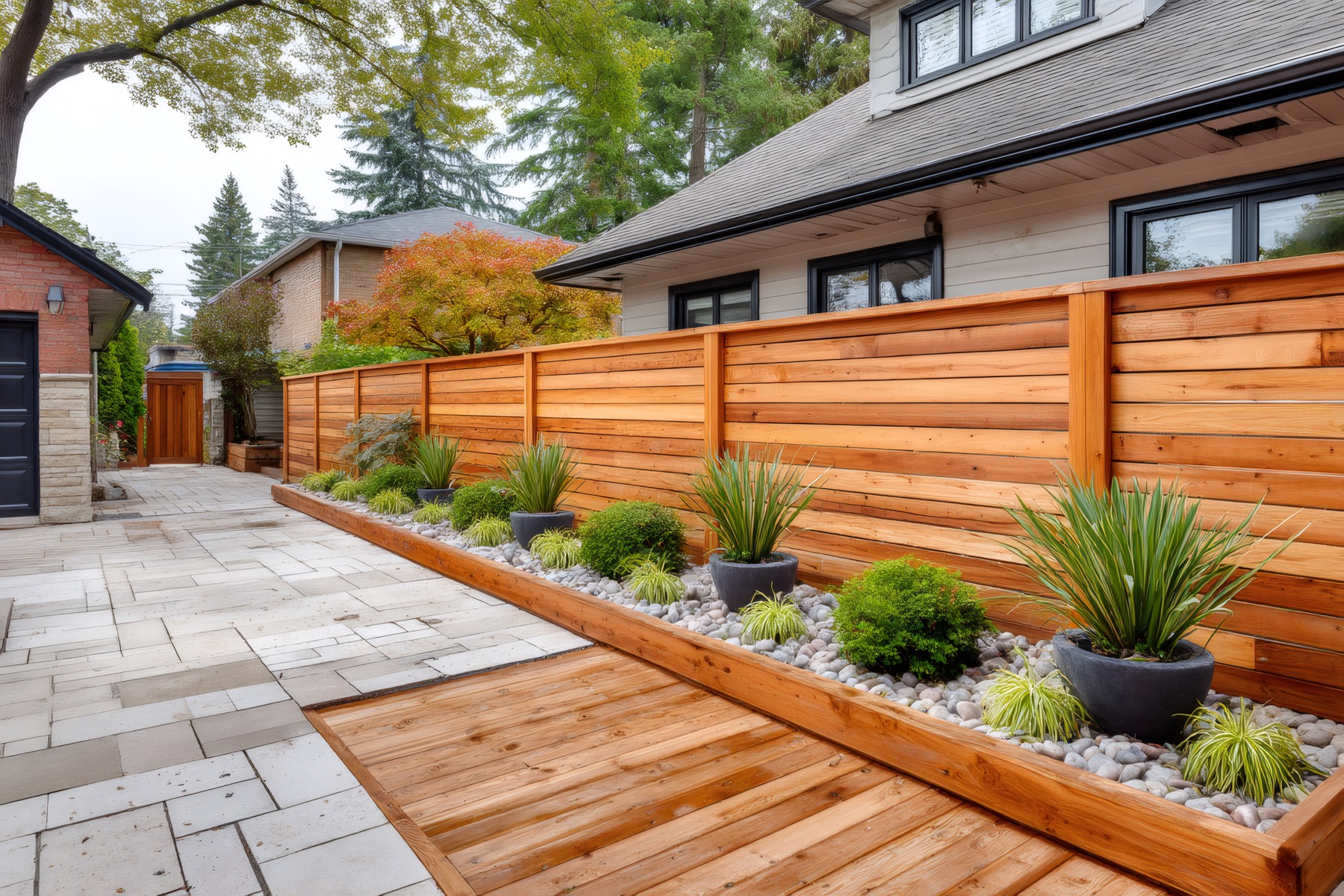
Fence Build
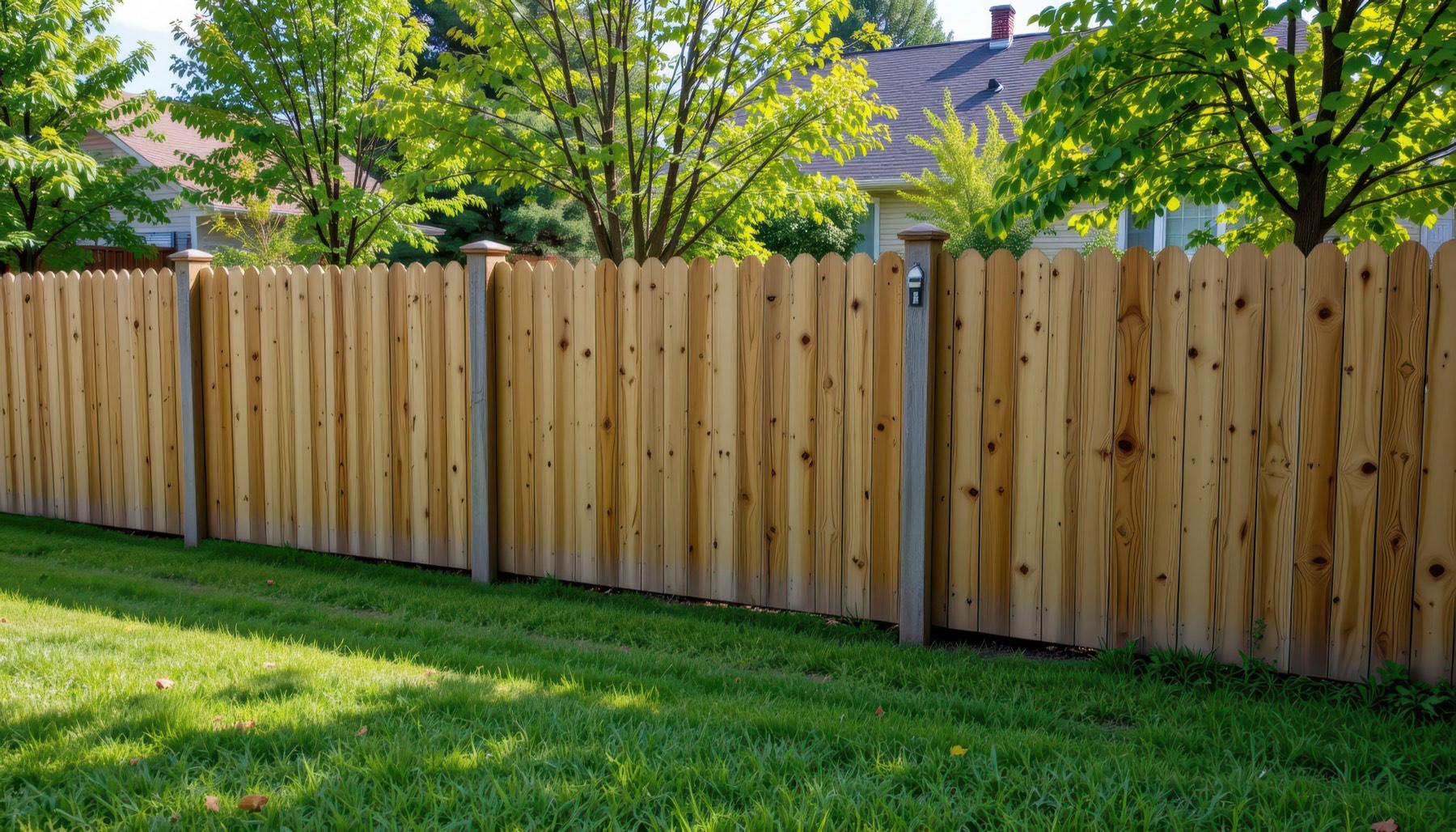
Fence Repair
FAQ
A well-built cedar fence in the Everett area typically lasts fifteen to twenty-five years. The variables that affect lifespan most are post quality and depth, concrete footing strength, board clearance from the soil, and how consistently the fence is maintained. Fences that fail early in this climate almost always have one of those factors wrong from the start — undersized posts, posts without adequate concrete, or boards sitting in contact with soil or mulch.
In most Everett residential zones, fences up to six feet in the rear yard can be built without a permit. Front yard fences and fences within certain setbacks from the street typically have lower height limits. The specific rules depend on your zoning designation and property location. We check permit requirements during the estimate visit and handle the application if one is needed.
Board-on-board provides better privacy because boards overlap and there are no gaps visible from any angle. Dog-ear boards are installed flush to each other, which means small gaps appear between boards over time as cedar dries and moves with the seasons. For a fully enclosed backyard where complete visual privacy is the goal, board-on-board is the stronger choice. For a property boundary where some visibility isn't a concern, dog-ear is a cost-effective option.
No — and we don't recommend cedar posts for ground contact. Western red cedar is excellent for fence boards above the ground but is not rated for soil contact. Posts buried in Everett's wet soil need to be pressure-treated lumber designed for ground contact. Cedar posts in the ground will rot at the soil line within five to eight years in this climate. We use pressure-treated posts as a standard on every cedar fence installation.
Yes. Sloped yards require either racked panels — where the fence follows the grade and panels slope with the terrain — or stepped panels — where the fence drops in horizontal increments that follow the grade in steps. Which approach is right depends on the slope angle, the fence style, and what looks right alongside the house. We discuss the options during the estimate visit and recommend the approach that fits the property.
Fence length, height, style, gate count, and site conditions all affect the price. A straightforward board-on-board fence along a flat rear yard costs less than a horizontal cedar fence on a sloped lot with two gates and custom post caps. The most accurate number comes from an on-site visit where we measure the run and look at what's actually there. The estimate is free and there's no obligation to proceed.
New cedar needs time to dry and acclimate before a finish bonds properly — usually four to six weeks after installation, depending on the weather. Applying sealer too soon traps moisture in the wood and can cause the finish to peel. We advise on timing during the project walkthrough so you know when to apply the first coat and what products work well in the Pacific Northwest climate.
If you're planning a cedar privacy fence, boundary fence, or custom cedar installation for your Everett-area property, the first step is a free on-site visit. We walk the fence line, measure the run, discuss style options, and put together a clear written estimate with materials, scope, and timeline.
No phone guesses. No pressure to commit on the spot.
Call (425) 645-9799 or fill out the estimate request form and we'll get back to you within one business day.
We serve Everett, Marysville, Snohomish, Mill Creek, Mukilteo, Lynnwood, Edmonds, Bothell, Kenmore, Woodinville, Shoreline, Kirkland, Redmond, Bellevue, and surrounding Snohomish County communities.